
The Solitaire Rules Everyone Remembers a Little Differently
Put a deck of cards on the kitchen table and ask two people to explain solitaire. Before long, someone may be insisting you have to turn over three cards, while someone else remembers turning over one. Then comes the accusation that using Undo is cheating. For a game designed for one player, it can attract a surprising amount of commentary.
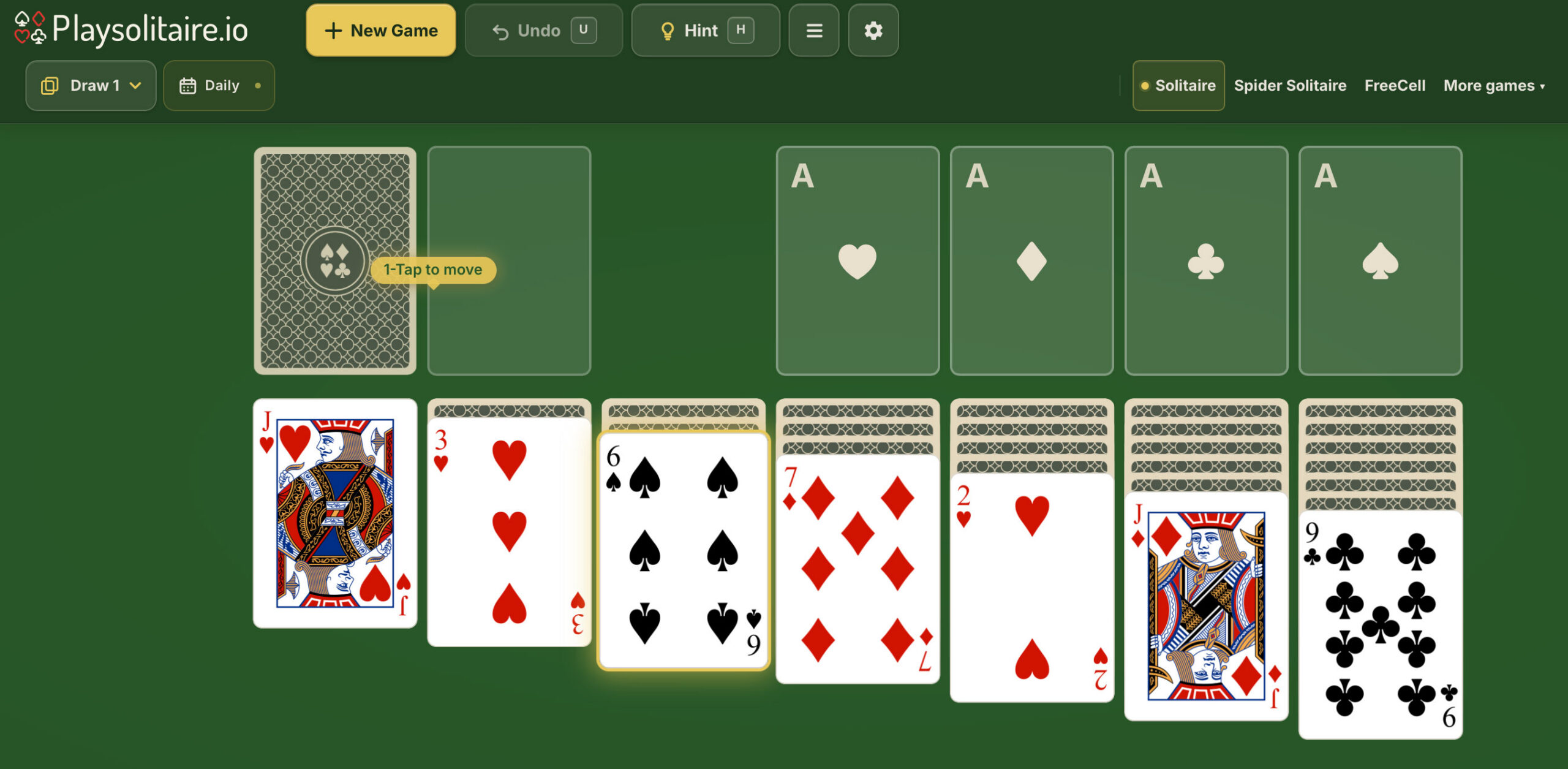
A useful way to settle those friendly disagreements is to replace “that is how I remember it” with a shared example. PlaySolitaire offers free classic solitaire in a browser, with written rules and a choice of draw modes. Using that board as the reference, the differences become easier to separate into three things: the game itself, its settings, and the personal challenge you choose.
First, which solitaire do you mean?
The familiar layout with seven columns is Klondike. Solitaire is the wider family, not the name of one universal set of rules. Spider and FreeCell belong to that family too, but recognizing one does not mean you already know how to play the others.
In Klondike, the aim is to gather all four suits into their own foundation piles, beginning with aces and finishing with kings. The columns in the main layout work differently: cards descend in rank and alternate between red and black. Remembering those two directions clears up plenty of confusion before anyone gets to the supposedly controversial rules.
That is also why “my grandmother played it differently” can be entirely true. She may have played a different solitaire, or a particular version of Klondike. Neither memory needs to be wrong.
One card or three is a setting, not a personality test
Draw One and Draw Three refer to the stock, the pile you turn over when looking for more playable cards. In the first mode, you reveal one card at a time. In the second, you reveal a group of three, but only the top card is immediately available to play.
The difference matters when the card you want is underneath another one. Seeing it does not make it accessible. You need to move the card above it, or reach it through a later sequence of draws and plays. The goal of completing the four suits remains unchanged.
So if one person likes Draw One and another insists on Draw Three, they do not need a verdict on who plays “proper” solitaire. They need to agree on a mode before comparing results.
The empty column is not free parking
An empty space looks like the perfect place to put a troublesome card. In standard Klondike, however, an empty tableau column takes a king, either alone or at the head of a valid sequence. A queen does not get a special pass because its owner has run out of ideas.
This is a good example of a rule rather than a preference. You can make up a different game with different rules, of course. But changing this one halfway through a deal means you are no longer judging that deal on the same terms. It is worth checking the rule before delivering a confident correction from the other side of the sofa.
Undo depends on what you are trying to do
Back on the browser board, Undo reverses a move. That can be useful when you want to understand what happened after moving a card, or when a click did not do what you intended. Trying another path is a reasonable way to explore the game.
A challenge with no takebacks asks something different of you. Once a hidden card has been revealed, reversing the move cannot erase what you learned. There is nothing wrong with enjoying either approach; the problem comes from comparing an exploratory game with an attempt played under stricter personal rules.
Decide what counts before starting. It is a lot less convincing to announce a ban on Undo immediately after somebody else finishes a deal.
Keep the argument smaller than the game
If you want to compare scores, use the same game and settings, and agree about hints and takebacks. Even then, different deals present different problems. One quick win is a good excuse for a little celebration, not conclusive evidence that you are the household champion.
Or leave the comparison out entirely. Ask someone which version they remember, let them explain it, and try a deal that way. The conversation might be more entertaining than the score. Just check what belongs in an empty column before you both start confidently moving queens.